Inspiring Small Art Ideas for Art Etiquette
If you love art etiquette, here you’ll find original ideas, color choices, and creative starting points you can easily try at home.
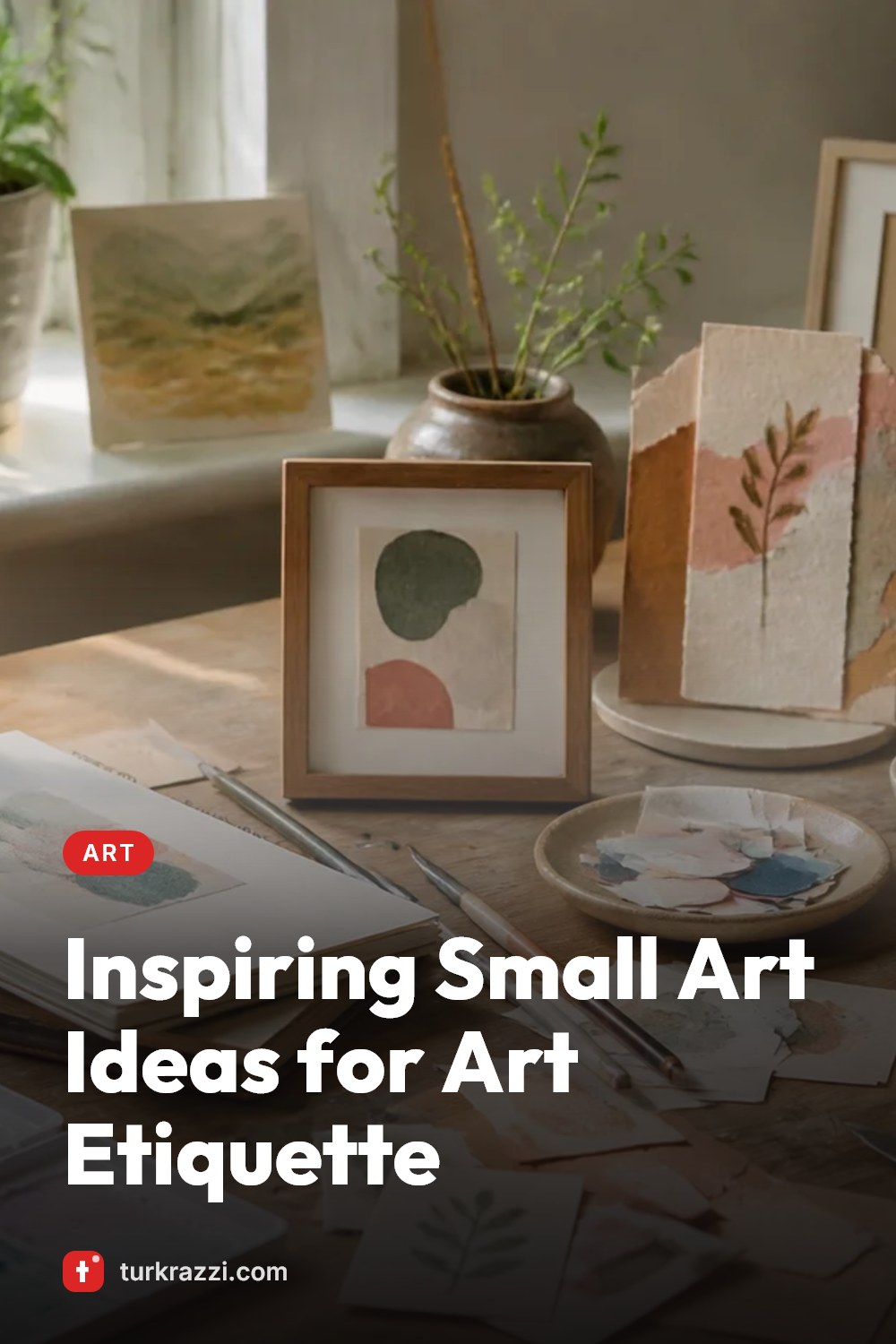
How to approach art etiquette?
Art etiquette can sometimes describe a single drawing style, and sometimes a very broad creative space made with different materials. That’s why, instead of narrowing the topic, it’s better to interpret it according to your own interests. Do you want to draw, try collage, or create small pieces you can hang on your wall? Once you define a clear direction, it becomes easier both to gather inspiration and to make better use of the materials you have.
The biggest misconception when working with art is expecting a “perfect” result at the very beginning. In fact, good ideas often emerge during the process of trying. Your first drawing doesn’t have to be perfect. The colors don’t have to match either. What really matters is finding a starting point that gets you moving.
Discover your own style with small experiments
In art, style is often not found all at once. It gradually takes shape by trying different things. That’s why it’s a good idea to set yourself short, manageable goals. One day you can just try patterns, another day work with a single color, and another day make collages from old magazines.
These small experiments are very useful for beginners:
- Make a monochrome work: By using light and dark shades of the same color, you can achieve a simple but effective look.
- Draw an object from different angles: Choose a mug, a leaf, or a chair and make three different interpretations.
- Try collage: Create a new composition by bringing together old papers, texture pieces, and colorful cutouts.
- Play with lines: Fill empty space with thin, thick, broken, or curved lines.
- Focus only on textures: Try to imitate rough, soft, matte, or shiny surfaces.
The common point of these small exercises is that they don’t put pressure on you. Each one can be done in a short time, and in the end you’ll have new ideas in hand.
Simple methods that make color choices easier
Color is one of the strongest sides of art. But using too many colors can make the work feel scattered. That’s why it’s better first to decide what kind of feeling you want to create. Do you want a calm, natural, energetic, or romantic mood? You can build your color palette accordingly.
Some useful approaches:
- For a calm look, use beige, cream, earth tones, and soft gray together.
- For a lively effect, add warm yellow, orange, and red tones as small accents.
- For a modern look, choose black, white, and one strong color.
- If you want inspiration from nature, olive green, brown, stone color, and light blue make a good combination.
When choosing colors, you don’t have to use every tone equally. Defining one main color and using the others as support helps the composition feel more balanced. Also, if you’re using very bright colors side by side, adding a neutral area in between reduces eye strain.
Material choice makes things easier
You don’t need expensive or special materials to start making art. The simple tools you already have can do a lot. Sometimes just a pencil, a felt-tip pen, and a few colored papers are enough. Keeping the materials to a minimum also makes it easier to focus.
You can easily start with these:
- Pencil and eraser
- Felt-tip pen or fine black pen
- Watercolor, gouache, or colored pencils
- Colored papers, magazine pages, wrapping papers
- Scissors and glue
- Old cardboard pieces or small canvas-like surfaces
When choosing materials, don’t forget that the surface matters too. If the paper is very thin, watercolor may cause it to warp. On a very slick surface, the pen may not grip the way you want. That’s why choosing a base suitable for the technique you’ll use directly affects the result.
Tips that will make the composition look stronger
What makes a work impressive is not always the amount of detail. Sometimes the use of empty space, and sometimes a single focal point, carries the whole effect. That’s why, when building a composition, don’t try to fill every corner. Leaving areas where the eye can rest makes the piece look more balanced.
There are a few points you can pay attention to:
- Set a main center: Decide where you want the eye to land first.
- Leave empty space: Instead of filling every area, create breathing room.
- Use repeated elements: Repeating the same form in different sizes creates order.
- Create contrast: Bring light and dark, hard and soft, flat and textured surfaces together.
- Pay attention to the edges: If the edges of the composition look too sharp, the work may feel unfinished.
If a piece seems too complex to you, first go back to basic shapes. Working with circles, lines, triangles, and spots makes it easier to build a composition. It’s safer to move on to details after you’ve organized the big picture.
Build small habits to find inspiration
Waiting for inspiration can be tiring. Instead, collecting small notes in daily life is a more effective method. A sky color, a texture you see on a wall, a vegetable that catches your eye at the market, or an old ceramic pattern can give you an idea. You don’t have to use them right away; just saving them is enough.
You can choose one of these habits for yourself:
- Collect color notes on your phone or in a notebook.
- Quickly sketch patterns you like.
- Record shapes that please your eye during the day with small sketches.
- Try the same subject again with different techniques.
- After finishing a work, write short notes about what you liked and what you’d like to change.
These habits turn you into a more attentive observer. Over time, you’ll learn not only how to make art, but also how to collect ideas.
Bringing art into daily life
Thinking of art not as something done only “at special times,” but as part of your everyday life, makes it much more sustainable. The shape of a coffee cup, the light by the window, the pattern on a shirt, or even the chaos on a tabletop can turn into a small work idea. When you look at it this way, searching for inspiration doesn’t become harder, and your surroundings start to feel more meaningful.
You can be productive without setting big goals for yourself. Making one small work a week, choosing one theme a month, or even just drawing 15-minute sketches can be enough. What matters is consistency. Progress in art usually comes not all at once, but through regular repetition.
If art etiquette appeals to you, think of it as a broad and free space. Draw, try cut-and-paste, play with colors, talk with textures. The best ideas often appear at an unexpected moment, inside a simple experiment.
If you spot a mistake, write to [email protected].


Comments (0)
No comments yet. Be the first to comment.
Sign in to write a comment.