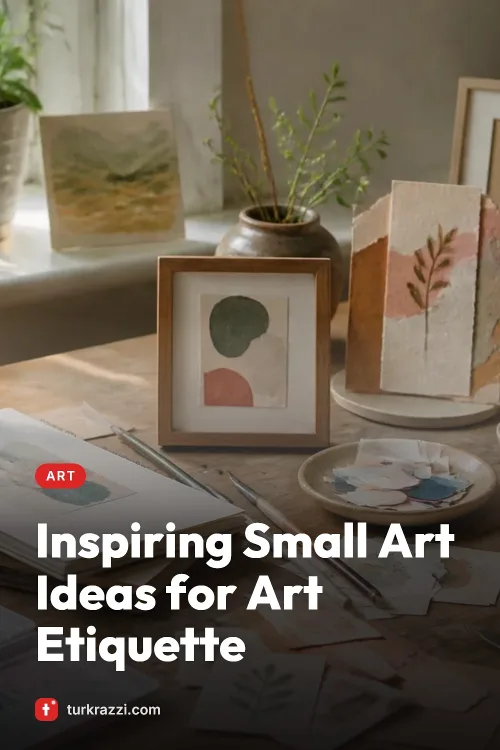
#art
Art Inspiration: Creative Ideas and a Beginner’s Guide
Art is one of the most beautiful ways to express yourself without sticking to a single right answer. Under the “Art” tag, you can explore many different styles, from painting to collage, from digital drawing to mixed media. What matters is not getting a perfect result; it’s trying, observing, and gradually defining your own taste. Even knowing which materials you’ll work with at the first step helps you feel more at ease.
What to look at while finding your style
If you’re new to art, first think about the visual language you like. Do you prefer softer, calmer works, or strong colors and clear lines? Sometimes even a single subject can point you in the right direction: face drawings, abstract compositions, nature themes, typography, minimal illustrations, or everyday objects.
Read more
These questions will make things easier:
- Which colors feel closer to you?
- Are you more excited by pencil drawing, using paint, or digital work?
- Do detailed works or quick, free sketches suit you better?
- Do you want to move forward around a single theme, or do mixed experiments appeal to you more?
Simple and safe methods to get started
When starting out in art, setting small goals is very helpful. Instead of making a big piece, you can loosen up with short exercises. For example, drawing a single object from different angles, trying the same idea with three different color palettes, or taking inspiration from a photo and adding your own interpretation are all good ways to begin.
Ideas you can try:
- Choose a word and express it with abstract colors.
- Reinterpret an everyday object with different line thicknesses.
- Create a harmonious composition using only two or three colors.
- Make a collage with old magazines, paper scraps, or pieces of text.
- Work on the same subject both with neat and free brushstrokes.
Tips that will help with color and composition
Your color choice can completely change the mood of the work. While soft tones create a calmer effect, contrasting colors give a more energetic look. If you’re unsure, start by working with a limited number of colors. This reduces visual clutter and makes the focus clearer.
Keep these points in mind when building a composition:
- Decide on the main focal point from the start.
- Don’t be afraid to leave empty space; you don’t have to fill every area.
- Create cohesion by using the same line directions or repeating shapes.
- You can create a sense of depth by keeping light and shadow simple.
Let your own art routine take shape
A good art practice grows more through small but regular steps than through big, infrequent attempts. Even setting aside a short time every day strengthens your eye and your hand. Sometimes, instead of deciding right away whether a piece is good or not, it’s more useful to look at it again a few days later. That way, you understand more clearly what you like and what you want to improve.
Move forward without putting pressure on yourself. The best part of art is finding your own language over time. The small sketch you make today can turn into a more original style tomorrow. The most valuable thing is that you keep trying and bravely bring out your own perspective.
Comments (0)
No comments yet. Be the first to comment.
Sign in to write a comment.