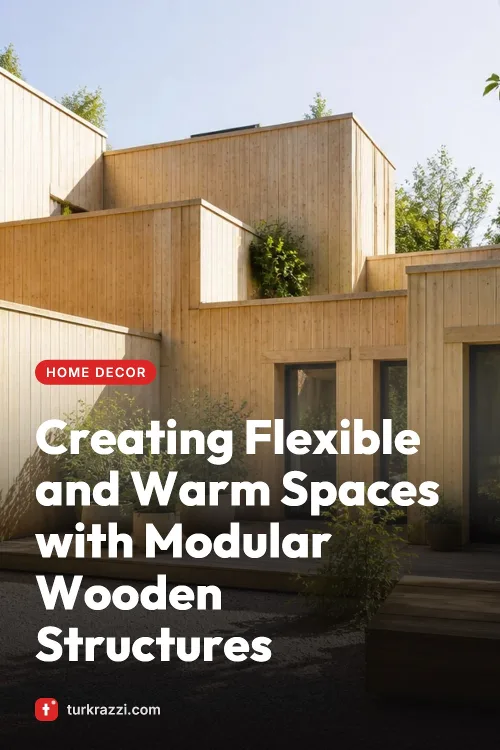
#modüler tasarım
Modular Design Ideas and Usage Guide
What is modular design?
Modular design is the idea of building a whole from compatible pieces instead of a single unit. This approach gives you great flexibility in home decor, furniture, closet organization, workspaces, and even in some accessory choices. As your needs change, you can move pieces around, add them, or reduce them. This both makes organization easier and helps you use your space more efficiently.
Why is it preferred?
Read more
The best thing about modular structures is that you are not tied to a single solution. You can create an organized setup in a small room without taking up too much space, and in a larger area, you can use the same system on a bigger scale. Also, if your tastes change over time, you won’t have to rebuild the whole arrangement from scratch. You can refresh the look by changing just a few pieces. That’s why modular design offers both a practical and long-lasting approach.
Where can you use it?
- In the living room, you can create a flexible arrangement with combinations of shelves, baskets, and side tables.
- In a workspace, you can use storage solutions that can be divided into different sections.
- In the closet, you can plan drawer, box, and hanger systems together.
- In the kitchen, you can make the most of the space with jars, shelves, and compartment organizers.
- In decor, you can choose wall panels, portable lamps, and pieces that can be used separately.
What should you pay attention to when starting?
First, it’s important to clarify the needs of the space. Try to choose pieces that are not only beautiful but also truly useful. Measuring is very helpful here, because in modular systems, fit is one of the most fundamental factors that determines success. If you proceed by considering the proportions of the pieces to one another, the result will look more balanced.
Also, using too many pieces is not always better. Sometimes a few well-chosen modules look much more stylish than a crowded arrangement. If you move things around often, light and easy-to-carry pieces may be more practical. Choosing materials that are easy to clean and maintain also makes everyday life easier.
How can you achieve harmony in the look?
In modular design, different pieces naturally come together, so it’s very important to maintain visual harmony. Defining the color palette from the start is a good place to begin. Neutral tones create a calm atmosphere, while a single accent color can make the space feel more lively. Variety in texture is effective too; for example, you can balance surfaces like wood, fabric, and metal together.
If you want a more minimal look, use repeating forms. If you want a more creative feel, place the modules in a balanced but not symmetrical arrangement. What matters here is creating a deliberate variety instead of a tiring mess.
Small tips for your first try
- Start with a single area; for example, a bookshelf, entryway, or work corner.
- Choose the need first, then the decorative details.
- Use colors and materials from the same family together.
- Leave flexibility by setting up systems that can be expanded as needed.
- After arranging the space, use it for a few days and observe what’s missing.
Modular design gives you both order and freedom. When you choose the right pieces, your living space not only looks more stylish; it also makes your daily life easier.
Comments (0)
No comments yet. Be the first to comment.
Sign in to write a comment.